Visiting Lecturer in Political Economy · Duke Kunshan University

Na Fu
傅娜

Labor, platforms, and the children left behind. Studying what the factory floor reveals about power, space, and care.
Explore the Work Networked Hands Station
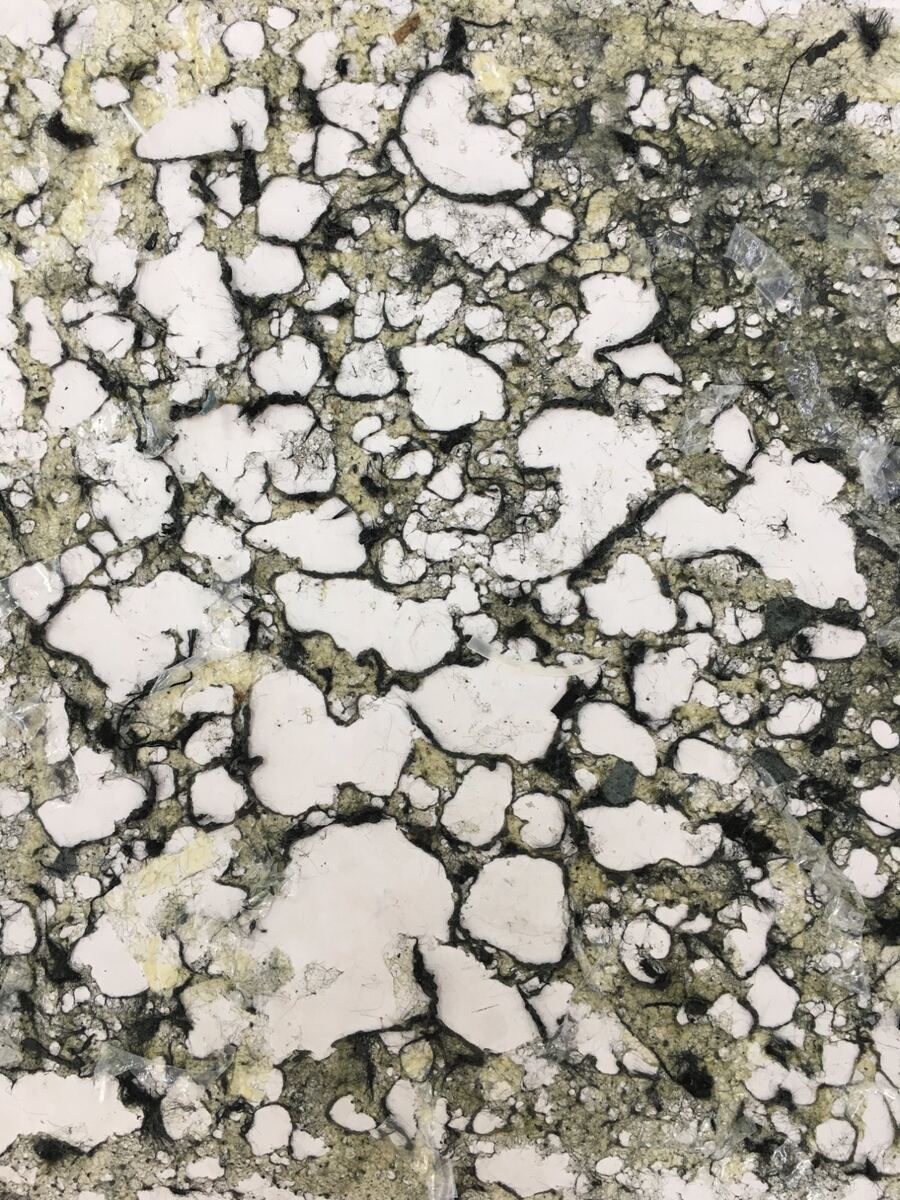
Shoe sole gluing process, Pearl River Delta fieldwork
184
field sites mapped across five provinces
14mo
ethnographic fieldwork in China
120+
interviews with workers, managers, families
About

Political economy
meets the factory floor

I am a scholar of labor, digital platforms, and institutional transformation in contemporary China. My research traces how platform capitalism reorganizes manufacturing production. Factories are not eliminated. They are dispersed, their workers fragmented, and the spatial concentration on which labor politics once depended is dissolved.

My fieldwork spans five provinces. Guangdong, Fujian, Zhejiang, Hunan, and Anhui. I follow migrant workers, platform intermediaries, and workshop owners as they navigate systems they can rarely see whole.

Alongside this industrial research, I lead an independent initiative, 手握手驿站 (Networked Hands Station), focused on the children of migrant workers in platform economy communities. The pilot begins in Kunshan in summer 2026.
Learn about Networked Hands Station →

Positions and CV
Duke Kunshan University · 2025–2027
Visiting Lecturer, Political Economy
Brown University · Watson Institute · 2023–2025
Postdoctoral Research Associate, China Initiative
The New School for Social Research · 2023
Ph.D., Politics. Comparative and Global Politics.
University of Texas at Austin · 2014
M.S., Community and Regional Planning
University of the Arts London · 2009
B.A., Interior and Spatial Design
Curriculum Vitae
Na Fu · 2026 · Download DOCX
↓
Research Program
01 · Labor
Shared labor,
fractured lives
Workers circulate across production sites without stable contracts, connected through digital networks and QR-code tracking. The new precarity is not joblessness. It is perpetual, institutionalized circulation.
02 · Institutions
Institutions
for instability
These are coordinated arrangements that do not reduce precarity but routinize it. The manuscript under review at Politics and Society asks a pointed question. What if instability is the system's goal rather than its failure?
03 · Space
Algorithmic
geographies
Platforms govern manufacturing through spatial dispersion rather than concentration. Space persists, but power dissipates. 空间仍在,权力流失。
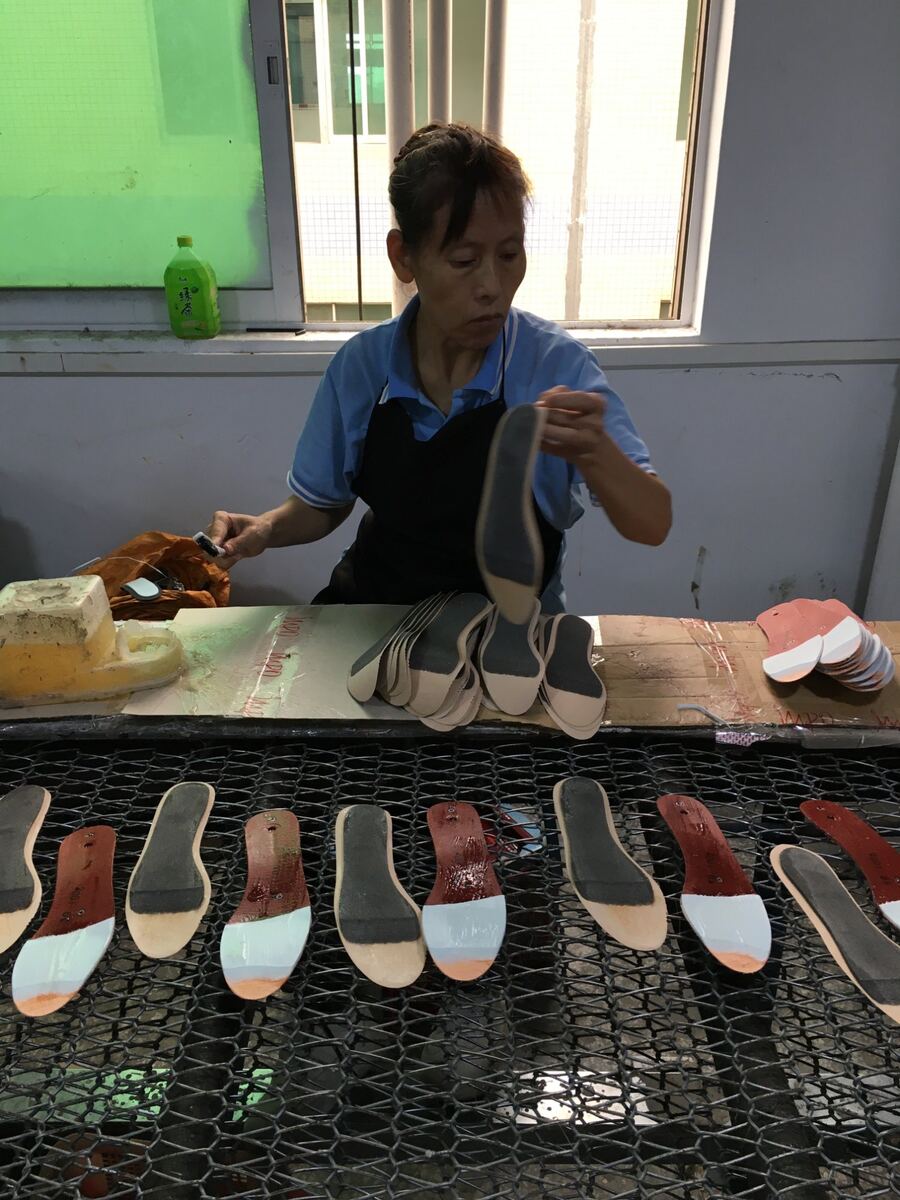
Worker applying glue to shoe soles, Dongguan factory fieldwork
From the Field

The shoe sole arrives through a QR-code order. The worker applies the glue by hand. The platform mediates everything in between.

Fourteen months of ethnographic fieldwork across five provinces. The research follows the production process from platform orders through workshop floors to workers' hands. Each stage reveals a different layer of the institutional arrangements that make shared labor possible and precarity durable.

Dongguan shoe factory, Guangdong. Field photograph, 2022–2023.

Book Manuscript
Networked Hands
Platform, Labor and Power in Chinese Manufacturing

Networked Hands

The manuscript traces how digital platforms transform manufacturing labor in China's Pearl River Delta. Factories are not replaced. They are reorganized into distributed, algorithmically governed networks. At the center of this argument is a new form of production the book names QR network production. Workers, workshops, and supply chains are coordinated through mobile platforms and real-time logistics rather than through stable employer relationships.

The institutional argument is the book's spine. These are durable arrangements designed to maintain instability as a resource. The labor argument provides human texture, following workers, children, and families as they navigate a system that benefits from their precarity.

Proposal targeting Princeton University Press, MIT Press, and related publishers.

IntroThe Factory That Scattered. QR Networks and the New Manufacturing.
Ch. 1Shared Labor. Circulation Without Stability.
Ch. 2Institutions for Instability. Routinizing Precarity.
Ch. 3Algorithmic Geographies. Space Persists, Power Dissipates.
Ch. 4The State as Network. Governance Beyond the Factory Gate.
Ch. 5Ideology and Legitimacy in Platform Manufacturing.
Concl.Networked Hands. Labor, Care, and the Children Left Behind.
Journal Articles
2026
Journal Article · Under Review
Institutions for Instability: How Platform Capitalism Produces Shared Labor in China's Manufacturing Sector
Politics and Society
Revise and Resubmit
2025
Journal Article · Published
Science, Technology, and Human Values
Published · doi:10.1177/01622439251366756
2017
Journal Article
Journal of Cleaner Production, Vol. 173, 24–38. With Ying Liu and Yanliu Liu.
Published
Book Chapters
In Progress
Book Chapter · Manuscript
Algorithmic Geographies: How Platform Logistics Governs Manufacturing Through Spatial Dispersion
Chapter 3 of the book manuscript. Draft complete at approximately 10,000 words.
In Progress
2020
Book Chapter
The Spatial Decoupling and Recombination of Capital and Labor
In Mobilities of Labour and Capital in Asia, edited by Preet S. Aulakh and Philip F. Kelly. Cambridge University Press, 120–154. With Xiangming Chen and Sam Zhou.
Published
2016
Book Chapter
Community Building: Releasing the Pressure
In Shenzhen from Factory of the World to World City, NAI010, 114–118.
Published
Conference Papers
2025
Conference Paper
Precarious Geographies: Migrant Labor in China's Network Production
Harvard Urban China Conference
2025
Conference Paper
Navigating Success through Failure: State-Market Interaction in Dongguan and Huizhou
Association for Asian Studies
2024
Conference Paper
Smart, Fluid, and Out of Control: Shared Labor under Mass Customization in China
Association for Asian Studies
Teaching
DKU
Course · Community-Based Learning
POLECON 107: Who Does the Work? Labor, Power, and the Platform Economy
Duke Kunshan University. Fieldwork is integrated with pedagogy and direct community engagement.
Factory sewing line, Dongguan
手握手驿站 · Networked Hands Station

Who cares for the children
when the factory moves?

Platform-driven production relocation separates families across provinces and years. Left-behind children and migrant children in transit face educational disruption, emotional precarity, and limited access to community support. Networked Hands Station is an independent initiative built to address this. It grows from the ground up, grounded in relationships before data, and accountable to the communities it serves.

The Problem
■

Left-behind children

When parents follow platform-routed production relocations, children remain in rural hometowns. Connected only through phones, they are separated from parents for months or years at a time. Labor mobility is, structurally, family separation.

■

Migrant children in transit

Children who move with parents face school access barriers, social isolation, and repeated displacement when production contracts shift. They are permanent newcomers in temporary communities.

■

Platform communities

Logistics hubs and factory zones concentrate migrant families in areas with limited public services. Kunshan's Foxconn community is one such site and will serve as the anchor for the 2026 pilot.

Initiative Design

Networked Hands Station is independent. It is not a university program. It is a community-rooted initiative that grows from relationships, not from institutional mandates.

The methodology places researchers and community members in relationship before any data is collected. The summer 2026 pilot in Kunshan will weave three strands into a single prototype. The first is factory-adjacent fieldwork in the Foxconn community. The second is children's programming built alongside local partners. The third is sustained community engagement practice that can be evaluated, refined, and replicated.

Community Partners
宝藏小屋
Kunshan · Children's Community
Community organization working with migrant children in the Kunshan area. Pilot partner for children's programming and researcher placement.
Yijiale Gongyi · 益家乐公益
Suzhou · Community Welfare
Suzhou-based organization providing family access and community welfare support in platform economy communities across the region.
深圳绿色蔷薇
Shenzhen · Labor NGO
Green Rose is a Shenzhen-based labor rights NGO with extensive experience supporting migrant workers and their families in manufacturing communities across the PRD.
我的打工网
2026 Pilot · Factory Fieldwork Partner
Partner for the Kunshan factory fieldwork strand of the 2026 pilot. Provides access and networks within manufacturing communities essential for grounded, worker-centered research.
InE · Duke Kunshan University
Kunshan · Academic Infrastructure
The Institute of Entrepreneurship and Innovation at DKU provides academic infrastructure and student research support for the Kunshan pilot. The initiative itself remains independent.
Wodedagong.com · 博悦劳务
Platform Labor Network
Active partnership with Boyue Labor Distribution Hub. Connects the initiative's research dimensions to platform labor networks and community members across the region.
手握手驿站
Shǒu Wò Shǒu Yìzhàn
Networked Hands Station
The name carries what the research makes visible. Networked hands are the hands that hold the production system together across dispersed worksites. The station is what those hands deserve. Not a destination, but a place to pause, to be recognized, and to be held in return. 手握手 is mutual. It moves in both directions. That is the point.
■
This initiative is independent. It uses academic partnerships where they are useful, and its accountability is to the communities it serves.
2025–26
Community partnerships established. Student researchers recruited and trained. Relationship-building phase begins across Kunshan and Suzhou partner sites.
Summer 2026
Kunshan pilot. Foxconn community site. Factory fieldwork with 我的打工网, children's programming with 宝藏小屋, and community engagement practice woven into one prototype.
2026–27
Pilot findings evaluated. Programming expanded. Independent organizational structure developed.
Horizon
Networked Hands Station as a self-sustaining community institution. A permanent waystation for migrant families in platform economy communities.
Get Involved

This initiative needs community partners, student researchers, and people who understand why labor scholarship must account for the children of labor.

If you are working in migrant communities, factory zones, or children's education in platform economy areas, we want to hear from you.

Get in Touch →
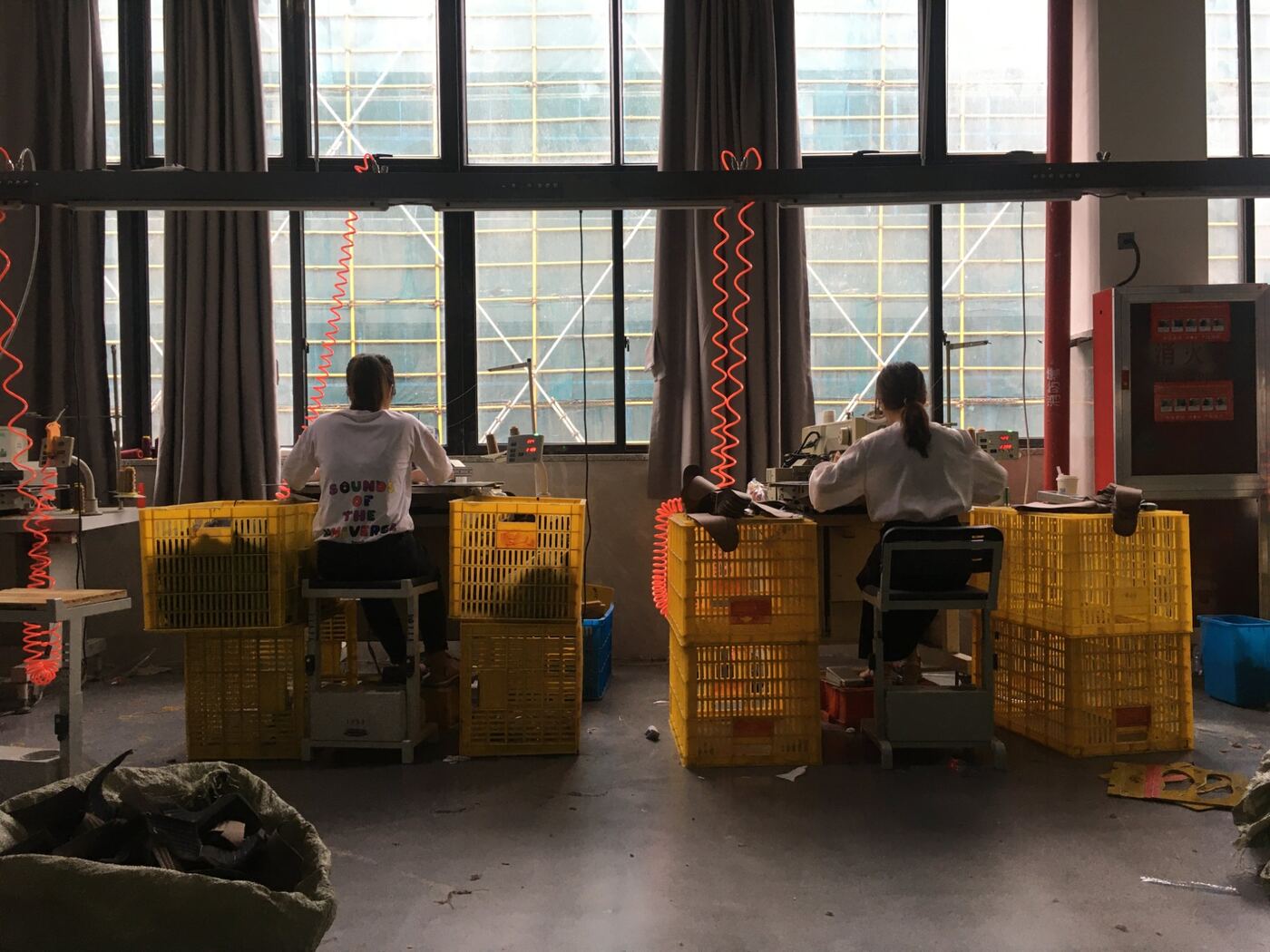
Two workers at stitching machines, factory floor, Pearl River Delta
Two workers at the stitching line. Pearl River Delta, 2022–2023.
Worker applying glue to shoe soles, Dongguan
Sole gluing. Dongguan shoe factory.
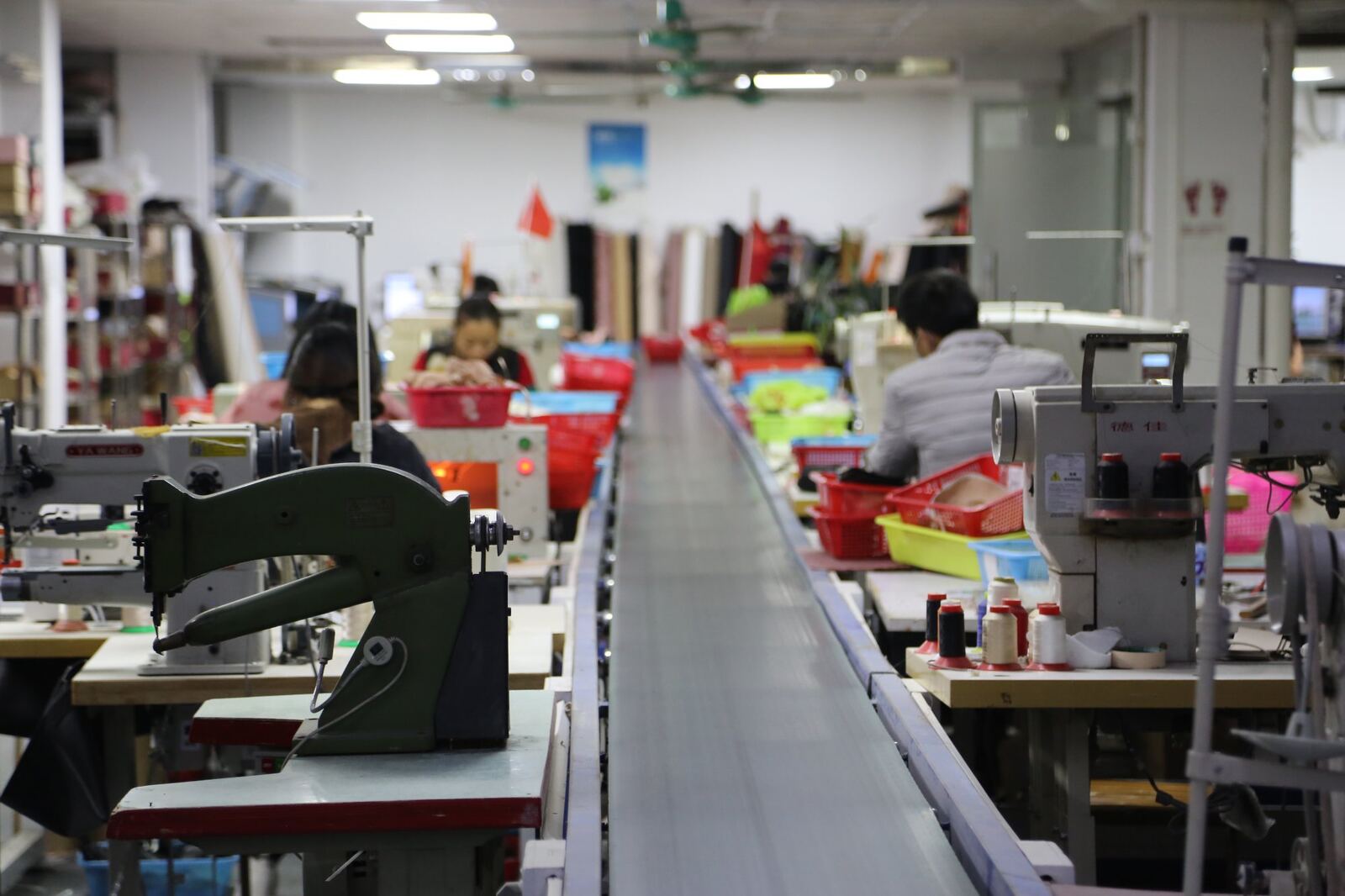
Sewing machine production line, shoe factory, PRD
The production line. Shoe factory, PRD.
From the Field
"The factory did not disappear. It scattered into apartments, workshops, delivery vans, and group chats."
Field notes · Dongguan, Guangdong
184field sites mapped
180factory visits
120interviews
5provinces
Fieldwork Provinces
GuangdongPearl River Delta. Dongguan and Huizhou. Core manufacturing fieldwork.
FujianComparative shoe and garment production networks.
ZhejiangPlatform intermediary and supply chain nodes.
HunanSending communities. Labor origin, circulation, and return.
AnhuiSending communities. Family separation and left-behind children.
JiangsuKunshan. Active fieldwork on short-term migrant labor. CSCC-funded through mid-2027.

Fieldwork centered on shoe manufacturing in Dongguan, with comparative sites across Fujian and Zhejiang. The sending communities of Hunan and Anhui anchor the labor-origin dimension of the research, including the left-behind children whose lives are shaped by their parents' migrations.

Current work in Kunshan focuses on short-term migrant labor, digital platforms, and WeChat network structures, supported by Duke Kunshan CSCC funding through mid-2027.

The 184 mapped sites represent a systematic spatial methodology. Tracking QR-network production nodes across the PRD generated the empirical basis for the Algorithmic Geographies chapter.

Ethnographic Figures
Delivery · Dongguan
Master Liu
Delivery van operator whose daily routes across the Pearl River Delta trace the logistics of QR network production. His movements open the Algorithmic Geographies chapter as a mobile index of dispersed manufacturing.
Management · Workshop
Mrs. Wang
Factory manager and workshop owner navigating platform intermediation and labor management simultaneously. Her position illuminates the institutional arrangements that govern shared labor from above.
Production · Fushan Village
Mr. Huang's Family
A family workshop in Fushan village where production, kinship, and platform dependency intersect. The household as the smallest unit of production in the QR network.
Contact

Work
together

I welcome conversations with researchers, community organizations, journalists, and educators working at the intersection of labor, technology, and care in China.

Labor studies without workers' children is incomplete.

Platforms are not neutral logistics. They are power architectures.

The factory did not disappear. It dispersed.

Space persists. Power dissipates.

手握手. Hand holds hand. Because no one should navigate this alone.

空间仍在,权力流失。networkedhands.org